
 Knowledge Blog > Nutrition
Lactose Intolerance: What to Eat? Which Proteins and Foods Are Suitable?
If you have lactose intolerance, the question quickly arises as to what you can still eat – what protein or magnesium is suitable if you cut out milk and dairy products. People with lactose intolerance have a limited tolerance for lactose, which is why symptoms such as intestinal discomfort after consuming classic dairy products are not uncommon. This article gives you a compact overview of nutrient sources & the question of how you can support your gut.
- Introduction
- What is lactose intolerance?
- What happens in the body?
- Milk protein allergy is not the same
- Do you have to avoid dairy products?
- These products are allowed
- Table: Dairy products & lactose content
- Which protein is particularly suitable?
- Proteins, these sources are suitable
- Magnesium: Which magnesium is suitable?
- Keep an eye on nutrients
- Intestinal recovery
- Intestinal support
- Nutrients for the intestines
- Nutrients in everyday life
- Dietary supplements & lactose
- Sources & bibliography
Themen dieses Blogartikels:
Introduction
Coffee with milk in the morning, a sandwich with cheese for lunch, perhaps yogurt for dessert in the evening – dairy products are firmly rooted in our daily lives. If you have lactose intolerance, you quickly ask yourself: Are you missing important nutrients by avoiding them, what's actually still in dietary supplements, and do you really have to be careful with every little thing?
What is lactose intolerance – and how many people are affected by it?
Lactose, also known as milk sugar, is found in almost every classic dairy product in your refrigerator – from drinking milk to yogurt to cream cheese. Chemically, it is a disaccharide composed of the two building blocks glucose and galactose¹, which occurs almost exclusively in milk and makes up the majority of carbohydrates there². In the small intestine, the enzyme lactase breaks down lactose into its two building blocks, which can then be absorbed³. Lactose also helps your body absorb calcium, magnesium, and zinc better⁴ – one reason why a blanket total avoidance is rarely the best solution.
By the way, you are not alone with your symptoms: A large German study of over 1,800 adults and adolescents found that almost 15 percent had so-called lactose malabsorption⁵ – i.e., incomplete digestion of lactose. Two things to help you put that number into perspective: It comes from a 1982 survey⁵, and not everyone with malabsorption even notices it in everyday life⁵. Depending on where you live in Germany, the frequency also varies greatly – from around 6 to 9 percent in the northwest to over 20 percent in the south and east⁵.
What happens in your body with lactose intolerance?
Here’s the short and direct explanation for your next tummy rumble:
- Lactase is absent or its activity is reduced⁷
- Undigested lactose then enters the large intestine⁷
- There, it is fermented by bacteria, producing gases⁷
- These gases and the osmotically active lactose lead to bloating, abdominal pain, and diarrhea⁷
How severe the symptoms are depends, among other things, on the amount consumed, your individual residual lactase activity, and your gut microbiome⁸ – this explains why a cappuccino sometimes doesn’t bother you at all, but a milkshake on an empty stomach does.

Lactose intolerance is not the same as a milk protein allergy
A common misconception: Lactose intolerance is often confused with a milk protein allergy (cow's milk protein allergy) – however, these are two fundamentally different processes in the body⁶. In lactose intolerance, only a digestive enzyme is missing, causing undigested lactose to ferment in the gut⁶. Milk protein allergy, on the other hand, is a true immune reaction to milk proteins such as casein⁶. Important to know: In lactose intolerance, only the carbohydrates in milk are affected – fat and protein are digested independently of lactase and do not cause symptoms on their own. This is the basis for us to confidently turn our attention to milk protein later in the article.
By the way: Other intolerances, such as histamine intolerance, can also cause similar intestinal complaints but have a completely different cause. If you are unsure which intolerance you have, you can find more information in our article on Histamine Intolerance.
Advertisement
- Contains 10 carefully selected strains of lactobacilli, bifidobacteria, and Bacillus subtilis
- 40 billion colony-forming units (CFU) per daily dose
- supplemented with riboflavin and acacia fiber
- enteric-coated vegan capsules made from plant-based cellulose
- for your gut health and well-being
- developed in collaboration with doctors and experts

Do you really have to completely avoid dairy products in everyday life?
Short answer: In most cases, no. A widespread misconception is that even the smallest amounts of lactose cause symptoms. Studies show something different: the vast majority of those affected tolerate single amounts between about 5 and 12 grams of lactose (which corresponds to approximately 100 to 250 milliliters of milk) without problems, especially when the amount is consumed with a meal⁹. A dash of milk in coffee or a piece of cake at a family celebration is therefore well within the tolerated range for most people. Only above about 12 grams does the probability of symptoms noticeably increase, and it usually only becomes really clear with very high amounts from about 50 grams¹⁰, as can be found, for example, in a large glass of milk on an empty stomach.

Important to know: There is no single tolerance threshold that applies to everyone, as this depends on your individual residual lactase activity, intestinal transit time, microbiome, and accompanying foods¹¹. A small group reacts sensitively to very small amounts¹². It's best to learn in everyday life by trial and error where your personal limit lies, instead of proactively cutting out everything completely.
Lactose Intolerance: These Foods Are Allowed
The following foods are generally well-tolerated:
- lactose-free dairy products
- hard cheeses such as Parmesan or mountain cheese
- yogurt and kefir, as their lactic acid bacteria can further support lactose breakdown in the intestine¹⁶
- fruit, vegetables, meat, fish, and eggs in their natural, unprocessed form
- grain products such as rice, whole grain bread, or oats
You should be more cautious with processed foods: lactose can be hidden there as a concealed additive, for example in sausages, ready meals, or baked goods¹³. A look at the ingredient list is therefore useful not only for dietary supplements, but also for processed products in general.
Dairy Products and Lactose: Table of Lactose Content
To categorize where larger and smaller amounts of lactose are found, here is an overview of typical dairy products per 100 grams¹⁴:
| Product | Lactose content (g/100 g) |
|---|---|
| Condensed milk | 9.9 |
| Skimmed milk | 5.3 |
| Whole milk | 4.9 |
| Fruit yogurt | 3.2 |
| Whipped cream | approx. 2.0–4.0³³ |
| Butter | 1.1 |
| Mozzarella | < 1.0³³ |
| Greek yogurt | 0.5 |
| Gouda | Traces (< 0.1)³³ |
| Parmigiano Reggiano | 0.01 |
For context: One liter of whole milk therefore contains around 49 grams of lactose – significantly more than the 5 to 12 grams that most affected individuals can easily tolerate per serving.
As a rule of thumb: the longer a dairy product has been aged or fermented, the less lactose it usually contains¹⁵. The lactose content of a product says nothing about its fat content – a high-fat hard cheese can still be very low in lactose.
Which protein is suitable for lactose intolerance?
Milk usually provides a particularly high-quality protein, while many plant-based alternatives offer slightly less, with the exception of soy¹⁷. However, this does not mean that a good protein supply is automatically lacking just because dairy products are no longer an unrestricted part of one's diet. There are a number of naturally lactose-free protein sources:
Protein despite lactose intolerance: These sources are suitable
These foods provide you with high-quality protein, completely lactose-free:
- Eggs
- Meat and fish
- Legumes such as lentils, chickpeas, and beans
- Tofu and other soy products, as soy provides particularly high protein quality compared to other plant-based alternatives¹⁷
- Nuts, seeds, and quinoa
When using protein powder: Classic whey protein is derived from milk and may contain lactose. Lactose-free whey isolates, where lactose has been largely separated, as well as purely plant-based protein powders based on soy, pea, or rice, are often the more tolerable choice here.

Interesting for all who rely on plant-based protein: pea protein provides plenty of lysine, rice protein scores with a lot of methionine – two essential amino acids that complement each other in this combination. This allows such a plant-based protein blend to achieve a more complete amino acid profile than the individual sources could on their own. A look at the ingredient list helps to find the right, lactose-free product.
Display
- PDCAAS of 1.0 - highest possible protein quality, on par with animal protein
- 8 g plant-based protein per serving from pea & rice
- 72% protein content, less than 2 g natural sugar per serving
- Refined with real fermented berries for natural flavor
- 750 g powder & natural sweetness with glycine, stevia & lucuma
- With wild blueberry, raspberry & baobab powder, delicious, berry & creamy
- Lactose-free, gluten-free & soy-free
- Developed with doctors & experts

Which magnesium is suitable for lactose intolerance?
Dairy products are not a primary source of magnesium, but they still play a role in its absorption: lactose can further support the absorption of magnesium in the intestine⁴. If milk is no longer a nutrient source, magnesium can be well covered by other foods, such as:
- Nuts and seeds, for example pumpkin seeds and almonds
- Whole grain products like oats, brown rice or quinoa (for whole grain bread and other baked goods, it's worth checking the ingredients list, as milk or whey are often added)
- Legumes
- Green leafy vegetables
- Dark chocolate with a high cocoa content – here it's worth checking the ingredients list, as even dark chocolate can contain traces of milk
When also using a magnesium supplement, in addition to checking for lactose-free options, it's also worth looking at the form of magnesium: some forms are generally described as being better tolerated by the gastrointestinal tract than others. For specific questions about the individually suitable form, consultation with a doctor is recommended.

What other nutrients should you keep an eye on?
Important upfront: Lactose intolerance itself does not automatically lead to nutrient deficiency. It only becomes relevant if milk and dairy products are severely restricted over a longer period and the nutrients they contain are not replaced by other sources⁸. In addition to protein and magnesium, it is worth looking at:
| Nutrient | Why it can become relevant in everyday life |
|---|---|
| Calcium | Dairy products cover a large part of the daily calcium intake in this country²³ |
| Vitamin D | Often becomes relevant together with a lower calcium intake when dairy products disappear from the diet⁸ |
| Vitamin B12 | Can become additionally relevant depending on other dietary habits⁸ |
| Iodine | Iodine intake can decrease if dairy disappears completely from the diet¹⁷ |
All data are based on the studies listed in the bibliography.
Display
- 13 minerals in a vegan complex, including magnesium, calcium and iodine
- Magnesium in three different compounds (malate, bisglycinate, taurate)
- Iodine & calcium from algae for improved bioavailability
- For your electrolyte balance
- In vegan & bioactive form
- Is listed on the Cologne List®
- Developed with doctors & experts

When the gut can recover again
This depends crucially on the type of intolerance. Primary lactose intolerance (lactase non-persistence) is a genetically determined, permanent decrease in lactase activity after weaning¹⁸ – in this case, the intestine does not "recover" in the true sense, and the reduced lactase activity and associated symptoms after milk consumption persist.
The situation is different with secondary lactose intolerance, which arises as a result of damage to the intestinal mucosa, for example due to a gastrointestinal infection or another underlying disease¹⁹. This form is reversible: once the intestinal mucosa has healed, lactase activity returns¹⁹. In children, this form of intolerance often improves within one to two months after the underlying disease has healed¹⁹.
Lactose Intolerance: How to Support Your Gut in Recovery
For acute intestinal discomfort such as severe bloating or abdominal pain, simple everyday measures often help:
- smaller portions and enough time to eat
- warmth, for example a hot water bottle on the stomach
- drink enough to compensate for fluid loss due to digestion
- temporarily particularly low-lactose, easily digestible food
- alternating rest and movement instead of lying down immediately after eating

Which micronutrients can additionally support your gut?
In addition to diet, specifically selected micronutrients can also be a valuable supplement.
Specific Bacterial Strains: Not all bacterial strains are created equal – some, such as Lactobacillus acidophilus, Bifidobacterium longum, or Streptococcus thermophilus, have their own β-galactosidase activity and can thus additionally support lactose breakdown in the gut, similar to the lactic acid bacteria in yogurt and kefir²⁰. A systematic review of controlled studies concludes that targeted probiotic supplementation can be supportive in lactase deficiency and lactose intolerance²⁰.
Prebiotic Fiber: Fibers like fructo-oligosaccharides or acacia fiber serve as food for gut bacteria. Regular intake can promote the adaptation of your gut microbiome without changing lactase activity itself²¹.
Riboflavin (Vitamin B2): Riboflavin contributes to the maintenance of normal mucous membranes²² – relevant because B2 is one of the nutrients that can become scarcer with a strong reduction in dairy products.
Important to know: These micronutrients have a supportive effect on the gut flora and mucous membrane, but do not replace a clarification by specialists if symptoms persist or are very severe. In this case, a visit to the doctor is the most sensible next step to rule out other causes.
Display
- 27 bacterial strains in a stable fermentative environment
- 30 billion colony-forming units per daily dose
- Mild formulation with fruity mango flavor – also for sensitive users
- With the traditional Reishi mushroom and grape seed extract
- Lactose-free and vegan
- Easy integration into daily life with only 30 ml daily
- Developed with doctors & experts

How to ensure your nutrient intake with lactose intolerance in everyday life
The good news for your diet: Fermented dairy products and aged cheeses are generally much better tolerated than pure milk³¹. The reason: Fermentation and aging significantly reduce the lactose content¹⁵. A piece of hard cheese like Parmesan on pasta or in a salad contains only minimal traces of lactose due to the long aging process¹⁵. Yogurt and kefir for breakfast or as a snack also contain live lactic acid bacteria, which can further support lactose breakdown in the gut¹⁶.
The daily calcium requirement for adults is around 1,000 milligrams – you can find more details on this in our article on Calcium. For comparison: Calcium-rich mineral water contains at least 150 milligrams of calcium per liter³². With a daily intake of 2 liters, you would theoretically already consume about 300 milligrams – almost a third of your daily requirement, just from drinking. You can best get the remaining 700 milligrams through your diet, for example, through the foods listed below.

Specifically for your daily routine:
- For breakfast: lactose-free milk or lactose-free yogurt with muesli, plus a few sesame seeds for additional calcium
- For lunch and dinner: broccoli or kale as a side dish, a piece of hard cheese in a salad, a glass of calcium-rich mineral water
- For in-between meals: a handful of almonds or a few mushrooms fried in a pan for riboflavin (Vitamin B2)
- For your daily rhythm: plan for regular, short periods outdoors for the body's own vitamin D production via the skin
Lactose-free dairy products, which are now available in every supermarket, are nutritionally almost identical to regular dairy products and provide the same amounts of calcium, vitamin B12, and riboflavin²⁴ – a simple switch that is hardly noticeable in everyday life.

Do food supplements contain lactose?
Not automatically, but possible. Lactose is occasionally used as a carrier and excipient in the pharmaceutical industry and in food supplements, for example in tablets or capsules, because it has stabilizing properties and is cost-efficient²⁵. For your daily life, this means: Reaching for a product off the shelf is not enough, but a quick glance at the ingredients list is – many preparations today are lactose-free.
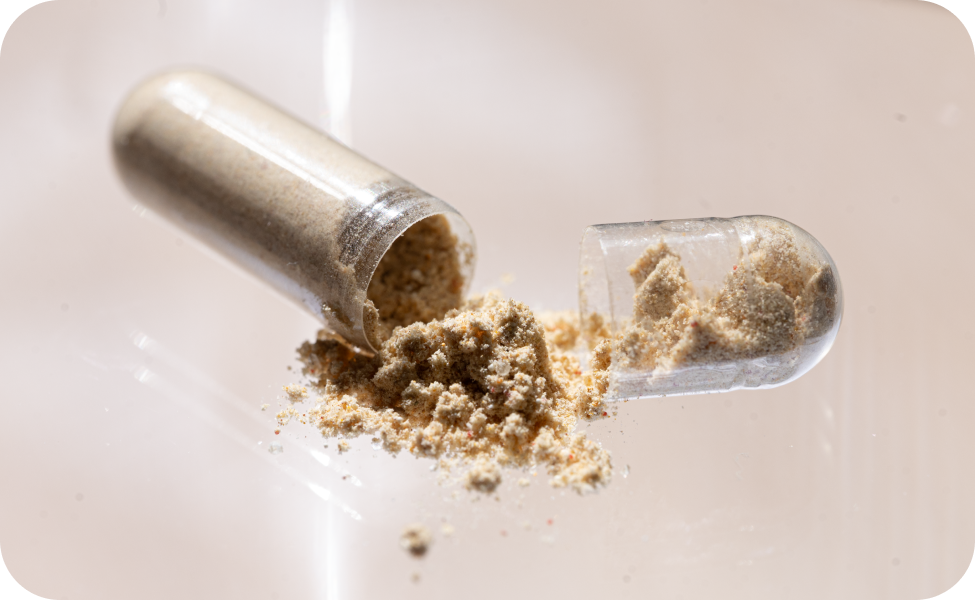
Can you take dietary supplements despite small amounts of lactose?
In most cases, yes. For many people, the very small amounts that can be found in a single tablet or capsule are not enough to cause symptoms. The average lactose intake from standard preparations is around 350 milligrams per day – significantly below the amount that most affected individuals tolerate without problems anyway²⁶. Even if you take several preparations in the morning and evening, the total amount usually remains below your individual tolerance threshold²⁷.
However: Sensitivity varies individually. Some particularly sensitive individuals report symptoms even with very small amounts²⁸. A practical everyday tip: Take preparations with a meal whenever possible, as this further improves tolerance²⁷. If you still regularly experience symptoms after taking them, it is worth switching to a lactose-free product.
Checklist: What to look for when buying food supplements
For your next trip to the store or online order:
- Check the ingredient list: Lactose can also be declared as "milk sugar" or "milk powder" there.
- Keep an eye on excipients: Even supposedly harmless excipients like dextrose or cellulose are often included in the product.
- Look for transparent labeling and laboratory testing of ingredients.
- If you have persistent uncertainty or high sensitivity, speak briefly with a doctor or pharmacist.
Conclusion
Lactose intolerance doesn't have to complicate your daily life. With a few simple adjustments – lactose-free milk in the fridge, hard cheese instead of cream cheese, a glance at the ingredient list for supplements – you will generally cover your nutritional needs automatically. And for the small amounts of lactose you might still encounter in everyday life: in most cases, there's no need to worry.
You can find more information about your gut, digestion, and important micronutrients in our Micronutrient Lexicon.
Display


More blog articles on this topic




Understanding Stress Eating & Cravings: Causes, Biochemical Processes, and How to Break the Cycle
Read article


Implementing Intermittent Fasting Correctly: Methods, Eating Windows, Autophagy & Nutrients
Read article









This article is based on carefully researched sources:
Sources & Bibliography
- Toca, M. C., Fernández, A., Orsi, M., Tabacco, O., & Vinderola, G. (2022). Lactose intolerance: myths and facts. An update. Archivos argentinos de pediatria, 120(1), 59-66. https://doi.org/10.5546/aap.2022.eng.59
- Dominici, S., et al. (2022). Lactose: Characteristics, Food and Drug-Related Applications. Foods, 11. https://doi.org/10.3390/foods11101486
- Costa, A., et al. (2019). Invited review: Milk lactose – Current status and future challenges in dairy cattle. Journal of Dairy Science, 102(7), 5883-5898. https://doi.org/10.3168/jds.2018-15955
- Gorlova, A., & Ilyina, A. (2022). The physiological role of lactose in native and hydrolyzed milk: a review. https://doi.org/10.20914/2310-1202-2022-2-57-61
- Flatz, G., Howell, J. N., Doench, J., & Flatz, S. (1982). Distribution of physiological adult lactase phenotypes, lactose absorber and malabsorber, in Germany. Human Genetics, 62, 152-157. https://doi.org/10.1007/bf00282305
- Darma, A., Sumitro, K. R., Jo, J., & Sitorus, N. (2024). Lactose Intolerance versus Cow's Milk Allergy in Infants: A Clinical Dilemma. Nutrients, 16. https://doi.org/10.3390/nu16030414
- Misselwitz, B., Pohl, D., Frühauf, H., Fried, M., Vavricka, S., & Fox, M. (2013). Lactose malabsorption and intolerance: pathogenesis, diagnosis and treatment. United European Gastroenterology Journal, 1, 151-159. https://doi.org/10.1177/2050640613484463
- Misselwitz, B., Butter, M., Verbeke, K., & Fox, M. (2019). Update on lactose malabsorption and intolerance: pathogenesis, diagnosis and clinical management. Gut, 68, 2080-2091. https://doi.org/10.1136/gutjnl-2019-318404
- Facioni, M. S., Raspini, B., Pivari, F., Dogliotti, E., & Cena, H. (2020). Nutritional management of lactose intolerance: the importance of diet and food labelling. Journal of Translational Medicine, 18. https://doi.org/10.1186/s12967-020-02429-2
- Wilt, T., et al. (2010). Lactose intolerance and health. Evidence report/technology assessment, 192, 1-410.
- EFSA Panel on Dietetic Products, Nutrition and Allergies (NDA). (2010). Scientific Opinion on lactose thresholds in lactose intolerance and galactosaemia. EFSA Journal, 8(9), 1777. https://doi.org/10.2903/j.efsa.2010.1777
- Bedine, M. S., & Bayless, T. M. (1973). Intolerance of small amounts of lactose by individuals with low lactase levels. Gastroenterology, 65(5), 735-743. https://doi.org/10.1016/s0016-5085(19)33008-2
- Fassio, F., Facioni, M. S., & Guagnini, F. (2018). Lactose Maldigestion, Malabsorption, and Intolerance: A Comprehensive Review. Nutrients, 10. https://doi.org/10.3390/nu10111599
- Maldonado, R. R., Costa, S., & Rossi, N. (2013). Evaluation of Lactose in Milk and Dairy Products. International Journal for Innovation Education and Research, 1, 56-59; Facioni, M. S., et al. (2020).
- Portnoy, M., & Barbano, D. (2021). Lactose: Use, measurement, and expression of results. Journal of Dairy Science. https://doi.org/10.3168/jds.2020-18706
- Chengolova, Z., Shentov, P., Ivanova, R., & Syarova, R. (2024). How to Keep Lactose Avoiders Healthy. Dairy. https://doi.org/10.3390/dairy5040052
- Walther, B., et al. (2022). Comparison of nutritional composition between plant-based drinks and cow's milk. Frontiers in Nutrition, 9. https://doi.org/10.3389/fnut.2022.988707
- Deng, Y., Misselwitz, B., Dai, N., & Fox, M. (2015). Lactose Intolerance in Adults: Biological Mechanism and Dietary Management. Nutrients, 7, 8020-8035. https://doi.org/10.3390/nu7095380
- Heine, R., Alrefaee, F., Bachina, P., et al. (2017). Lactose intolerance and gastrointestinal cow's milk allergy in infants and children – common misconceptions revisited. World Allergy Organization Journal, 10. https://doi.org/10.1186/s40413-017-0173-0
- Leis, R., De Castro, M. J., De Lamas, C., Picáns, R., & Couce, M. (2020). Effects of Prebiotic and Probiotic Supplementation on Lactase Deficiency and Lactose Intolerance: A Systematic Review of Controlled Trials. Nutrients, 12. https://doi.org/10.3390/nu12051487
- Forsgård, R. (2019). Lactose digestion in humans: intestinal lactase appears to be constitutive whereas the colonic microbiome is adaptable. The American Journal of Clinical Nutrition, 110, 273-279. https://doi.org/10.1093/ajcn/nqz104
- EFSA-approved health claim according to Regulation (EC) No 1924/2006: "Riboflavin contributes to the maintenance of normal mucous membranes."
- Taeger, M., & Thiele, S. (2021). Additional costs of lactose-reduced diets. Public Health Nutrition, 24, 4043-4053. https://doi.org/10.1017/s1368980021002779
- Li, A., et al. (2023). Advances in Low-Lactose/Lactose-Free Dairy Products and Their Production. Foods, 12. https://doi.org/10.3390/foods12132553
- Nencioni, A., Comelli, K., Bulfoni, M., & Nencioni, E. (2026). Analytical validation of an advanced U-HPLC–MS/MS method for lactose detection in food supplements and pharmaceuticals. Analytical and Bioanalytical Chemistry, 418, 3025-3036. https://doi.org/10.1007/s00216-026-06327-2
- Wanbon, L., Badry, N., & De Lemos, M. D. (2025). Lactose intolerance or gastrointestinal adverse drug effect? Journal of Oncology Pharmacy Practice, 31, 1316-1322. https://doi.org/10.1177/10781552251352203
- Szilagyi, A., & Ishayek, N. (2018). Lactose Intolerance, Dairy Avoidance, and Treatment Options. Nutrients, 10. https://doi.org/10.3390/nu10121994
- Mill, D., Dawson, J. L., & Johnson, J. (2018). Managing acute pain in patients who report lactose intolerance: the safety of an old excipient re-examined. Therapeutic Advances in Drug Safety, 9, 227-235. https://doi.org/10.1177/2042098617751498
- Perets, T., Gingold-Belfer, R., & Dickman, R. (2026). Lactose intolerance and probiotics. Antonie Van Leeuwenhoek, 119. https://doi.org/10.1007/s10482-026-02278-x
- Hodges, J., Cao, S., Cladis, D., & Weaver, C. (2019). Lactose Intolerance and Bone Health: The Challenge of Ensuring Adequate Calcium Intake. Nutrients, 11. https://doi.org/10.3390/nu11040718; Alkalay, M. (2021). Nutrition in Patients with Lactose Malabsorption, Celiac Disease, and Related Disorders. Nutrients, 14. https://doi.org/10.3390/nu14010002
- Silanikove, N., Leitner, G., & Merin, U. (2015). The Interrelationships between Lactose Intolerance and the Modern Dairy Industry: Global Perspectives in Evolutional and Historical Backgrounds. Nutrients, 7, 7312-7331. https://doi.org/10.3390/nu7095340
- Verbraucherportal Bayern. Sufficient calcium intake for healthy bones. https://www.vis.bayern.de/essen_trinken/krankheiten/gesunde_knochen.htm

